
Breast Implant Illness Treatment
A growing number of women with breast implants have reported a constellation of systemic symptoms — fatigue, joint pain, brain fog, autoimmune-like reactions, and others — that they attribute to their implants. This collection of symptoms has been termed breast implant illness, or BII. It is important to be transparent about the science: breast implant illness is not currently recognized as a discrete medical disease, no diagnostic test exists for it, and the symptoms commonly attributed to BII are non-specific and can be linked to many other medical conditions. At the same time, the patient experience is real, the symptoms are significant, and the relief many patients describe after en bloc removal of their implants and capsules cannot be discounted. The right approach is honest, careful evaluation — ruling out other causes through proper medical workup, treating the patient’s actual situation, and offering surgical removal when that is what the patient wants after informed discussion.
Dr. John Anastasatos provides breast implant illness evaluation and treatment at his Beverly Hills practice with the peer-vetted clinical authority and senior surgical training this complex evaluation requires. Dr. Anastasatos serves as an Expert Reviewer for the Medical Board of California — a credential reflecting the standards his California colleagues trust him to evaluate, particularly relevant for the complex clinical decision-making BII evaluation requires — and served as Chief Resident in Plastic Surgery at the University of Alabama at Birmingham, senior-level training covering the full reconstructive breast spectrum. Board certified by the American Board of Plastic Surgery, a Fellow of the American College of Surgeons (FACS), a member of the American Society of Plastic Surgeons (ASPS) and American Society for Aesthetic Plastic Surgery (ASAPS), and named by The Luxe Insider as one of the Top 10 Plastic Surgeons in the World.
What is Breast Implant Illness (BII)?
The first breast augmentation with silicone implants was done in 1962. Breast augmentation is considered to be one of the most popular cosmetic procedures sought after by women worldwide. Breast augmentation changes an entire appearance of a woman, making her feel more confident and feminine.
However, just like with any surgery, there are potential risks that need to be considered before undergoing breast augmentation. “Breast Implant Illness” (BII) is becoming a widely used term to describe a wide range of symptoms and complications that can develop after getting breast implants. BII can develop with any type of breast implant, including silicone gel-filled, saline-filled, smooth surface, textured surface, round, or teardrop-shaped. Breast implant illness is comprised of many different symptoms.
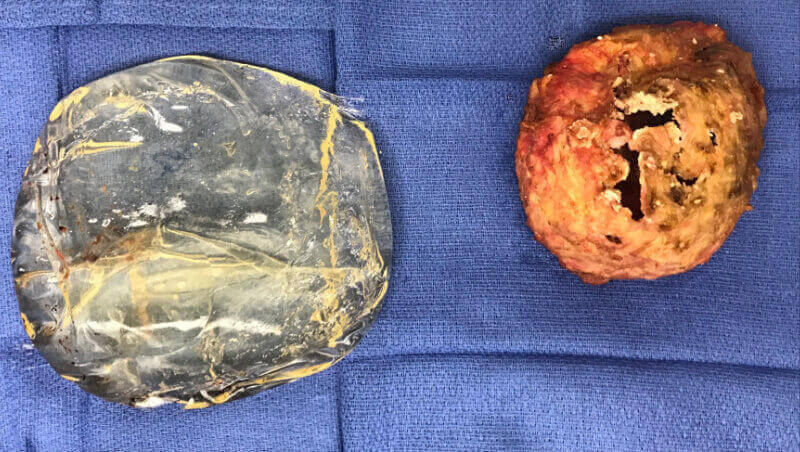
Severe capsular contracture &
ruptured silicone breast implants
Symptoms of BII
The complaints from women who have self-diagnosed breast implant illness include a group of specific symptoms. A woman could have any combination of the following symptoms that may or may not be related to their breast implants, including:
- Fatigue
- Hair loss
- Rashes
- Chest pain
- Headaches
- Depression
These symptoms can also be linked to many other conditions and may not be caused by breast implants. Since there is no known link to breast implants and any disease, it is not possible to test for breast implant illness. Those with these symptoms should see their primary care physician to be tested for other possible health conditions that could be causing their illness.
What are some of the common complications that may contribute to BII?
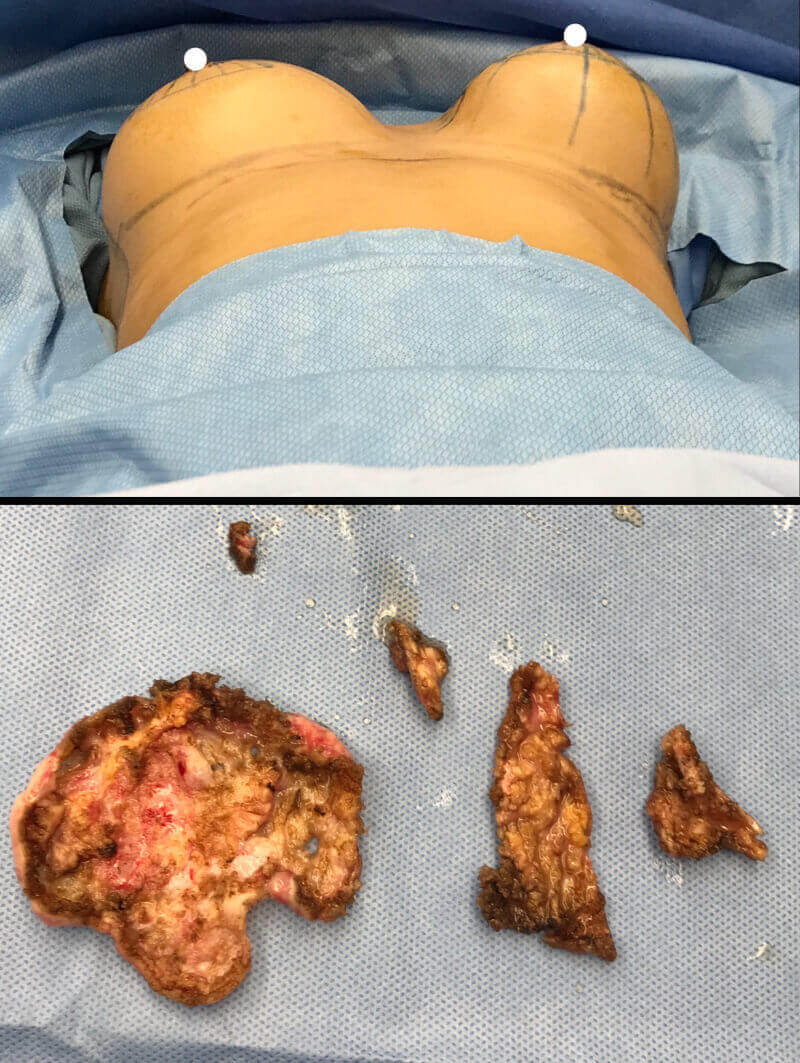
Capsular Contracture: Breast implants are considered to be “foreign objects” when placed in our bodies. Therefore, a woman’s body reacts to this foreign object by forming a capsule of scar tissue around the implants. Capsular contracture forms when this capsule tightens and becomes very hard. As a result, it can cause the breasts to become very hard or deformed, as well as causing discomfort and/or pain.
The true cause(s) of capsular contracture is not known. But, it is established it represents a reaction of the body against the silicone content of the breast implant.
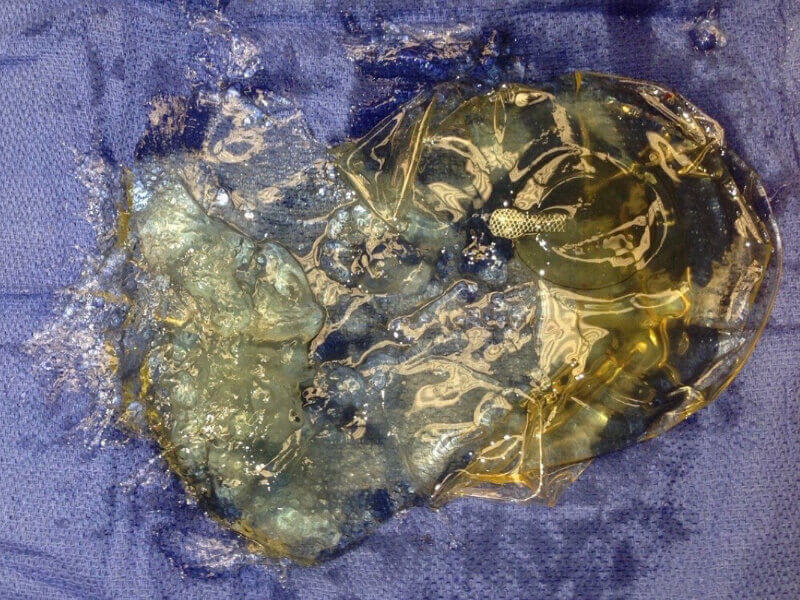
Breast Implant Rupture: With time, the longer a breast implant is in place, the more likely it is to break. Unfortunately, women may not know when their silicone gel breast implants break, because there experience no visible symptoms. Therefore, an accurate assessment of the rupture is diagnosed with magnetic resonance imaging (MRI). Contents from ruptured implants may spread within the capsule surrounding the implant, and it can even migrate outside of the capsule to other parts of the body. The longer this problem goes untreated, the more likely it may cause a patient to develop BII.
Removing Breast Implants in Beverly Hills
Breast implant illness treatments are limited due to a lack of evidence and testing to prove the condition exists. One option for treatment is removing the breast implants. However, this has had limited success in relieving symptoms of BII for those who have been self-diagnosed with this condition. Other treatment options can include breast lifts and fat transfer, which can offer relief for some patients.
If you are concerned that you are having symptoms of breast implant illness, contact us at Los Angeles Plastic Surgery in Beverly Hills. We can schedule an exam and consultation with Dr. Anastasatos, who can ensure your implants are in good condition and discuss your treatment options.